Legacy of Kain: Soul Reaver - The PS1 Vampire Epic That Bit Off More Than It Could Chew (And We Loved It Anyway)

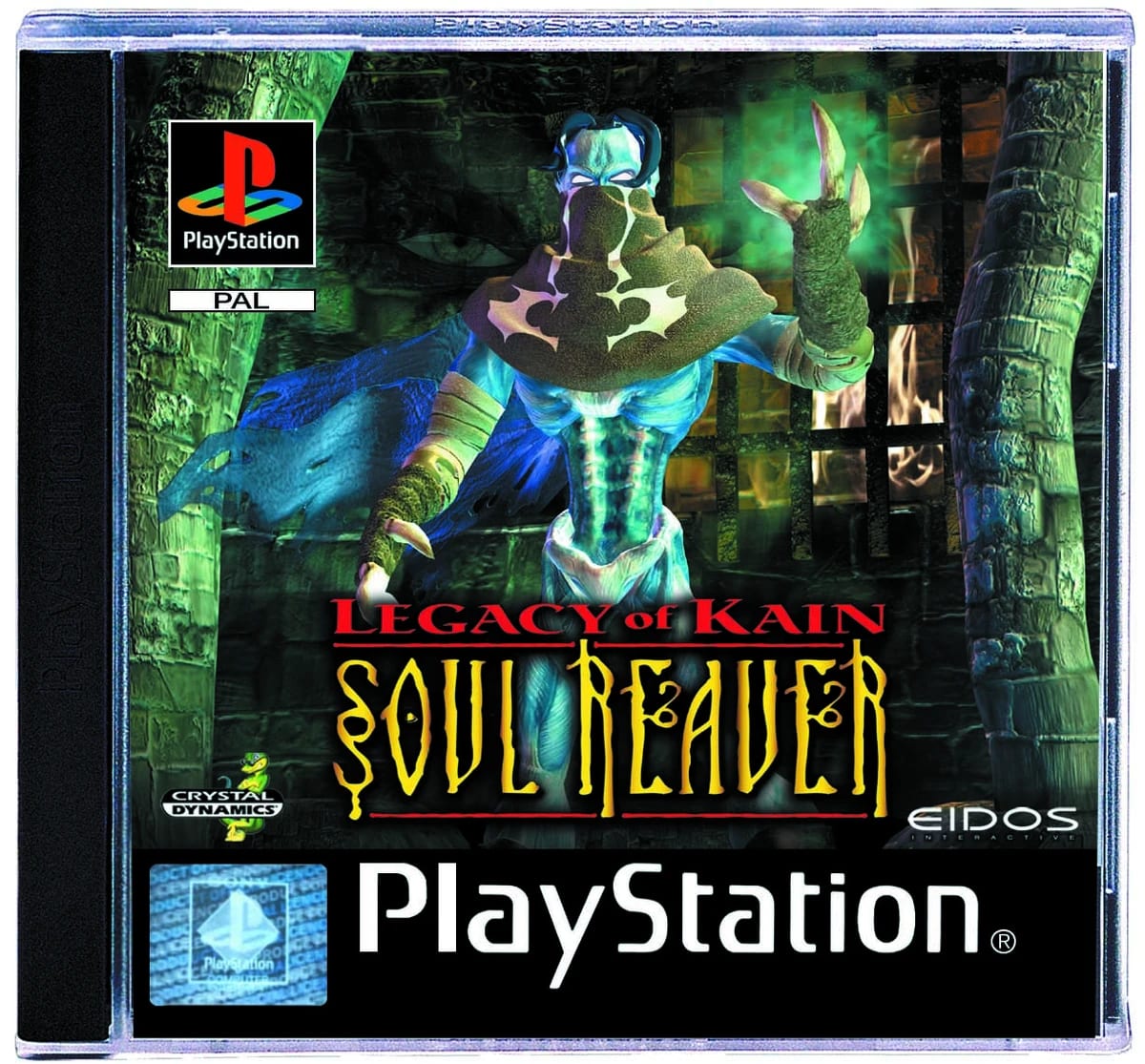
There's a specific kind of memory tied to renting a game on a Friday night because the box art looked like it belonged on a death metal album. Mine is Legacy of Kain: Soul Reaver. A blue, hollow-cheeked monster with a torn jaw and a cape, glaring out from the shelf at the local Blockbuster. I had no idea what a "wraith" was. I picked it up anyway. Best mistake of 1999.
So let's talk about it.
First, the setup, because it's gloriously bleak
Soul Reaver dropped on PlayStation in August 1999, with Crystal Dynamics developing and Eidos footing the bill. It's the sequel to Blood Omen: Legacy of Kain, but you don't need to have played that one. The game plops you down 1,500 years after Blood Omen ends, in a rotting world called Nosgoth where vampires sit at the top of the food chain and humans are basically livestock.
You play as Raziel. And here's the hook that grabbed teenage me by the collar: Raziel isn't the hero swooping in to save the day. He's a vampire lieutenant who got too powerful. He grew wings before his master Kain did, and Kain out of what looks an awful lot like petty jealousy tears the bones right out of those wings and chucks Raziel into the Lake of the Dead to burn for eternity.
Rough Tuesday.
Except Raziel doesn't stay dead. An ancient thing called the Elder God fishes his soul back out, reshapes him into a ghoulish wraith, and gives him one job: hunt down Kain and the brothers who watched him die. Revenge story, sure. But it's a revenge story dressed up in cathedral ruins and religious dread, and that combination hit different.
The realm-shifting trick that made it special
Most PS1 action games gave you a sword and a jump button and called it a day. Soul Reaver had a sword and a jump button too but its big idea was the two realms.
Raziel can flip between the material plane and the spectral plane more or less whenever he wants. And the two versions of Nosgoth aren't the same place. Walls warp. Platforms shift around. Water that would drown you in the physical world becomes a thin nothing you can walk across in the spectral one. Gates you can't open? Phase right through them as a ghost.
Half the puzzles in the game live in that gap between the two worlds. You'd stare at a room, totally stuck, then shift over and watch the geometry rearrange itself into a path. The first time it clicks, it's a little jolt of "oh, that's the trick." Edge magazine called the realm-shifting a complex and inspired piece of design, and honestly they weren't wrong it made you think of every room as two rooms stacked on top of each other.
The other clever bit: no loading screens. Crystal Dynamics built their own streaming tech so the world just kept going as you moved through it. In 1999, on a PlayStation, that felt borderline magical. People used to make a sandwich during load times back then. Soul Reaver didn't give you the chance.
Combat, souls, and a sword with a mind of its own
Fighting in Soul Reaver is the part people argue about, and fair enough. The basic loop is hack-and-slash string some hits together, finish with a flourish. The wrinkle is that vampires don't just die when you whack them. You have to stun them first, then actually destroy them: impale them, set them on fire, drag them into sunlight, or hurl them into water. Killing a vampire is a two-step commitment.
Your health works backwards from what you'd expect, too. In the material world it slowly drains. In the spectral world it climbs. Souls dropped by dead enemies top you back up. So you're always doing this little risk-management dance push through the physical realm, dip into the spectral when you're running low.
Then there's the Soul Reaver itself, the blade Raziel shares his name with. Kain swings it at him early on, it shatters, and its spectral form binds itself to Raziel as a wraith-blade. Catch is, the thing's temperamental. Take a single hit while wielding it and poof, it's gone until you heal back to full. A sword that abandons you the moment things get hard. Very on-brand for this game.
That voice cast, though
I have to stop and gush about the audio. Soul Reaver's voice acting was the kind of thing that made you turn the volume up so your parents wouldn't tell you to turn it down. Michael Bell as Raziel, all wounded pride and venom. Simon Templeman as Kain, dripping with this theatrical, Shakespearean contempt. Tony Jay as the Elder God, a voice like a cave deciding to speak.
The script gave them real meat, too. The back-and-forth between Raziel and Kain isn't your usual "I'll destroy you" videogame trash talk it's two damned creatures arguing about free will, fate, and integrity while they try to kill each other. GameSpot later ranked the game among the best voice acting in games, period. Deserved.
Kurt Harland handled most of the music, and he did something neat with it: the score actually shifted depending on what you were doing fighting, swimming, exploring using a custom MIDI setup that reacted to the game itself. Each vampire clan got its own musical flavor. Subtle stuff you didn't consciously notice but absolutely felt.
The elephant in the crypt: it's not finished
Here's where my love letter gets honest. Soul Reaver doesn't end so much as it just... stops.
The development was a mess, and not because the team was lazy the opposite, really. They over-designed the whole thing. Amy Hennig, the director, admitted later they'd built way more than could fit, so they split the original plans in two. On top of that, a legal fight with Silicon Knights (the Blood Omen developers) tangled everything up, and the release slipped from late 1998 all the way to August 1999.
What got cut? A bunch. Extra powers for Raziel. A third showdown with Kain. A whole expanded glyph magic system. A fifth brother, Turel, vanished from the story entirely due to time. The game you actually play is the front half of something much bigger.
You feel it most at the end. You chase Kain through a time portal, you pop out the other side, and Moebius the Time Streamer greets you with a cryptic little speech about destiny roll credits. Cliffhanger. Game Informer flat-out said it felt rushed, like it wasn't finished, and they had a point. 1UP even stuck it on a list of games that ended halfway through.
And yet. Even chopped in half, this thing reviewed brilliantly. IGN handed it a 9.3. GameSpot, a 9. The PlayStation version sits around 91 on Metacritic. By 2001 it had sold over 1.4 million copies and earned a Greatest Hits badge. A half-finished game that still ran circles around most of what was on the shelf.
Why it still matters
Soul Reaver is one of those games where the ambition outran the hardware and the deadline, and somehow that's part of the charm. It reached for a gothic, philosophical, two-worlds-at-once epic on a console that could barely hold it, fell a bit short, and what landed was still better than almost anything around it.
The vibe is what sticks with me. That crumbling, apocalyptic Nosgoth GamesRadar once called it one of the most fascinating wastelands they'd ever explored, and I think about that a lot. The look pulled from old black-and-white Nosferatu, from Miyazaki films, from Islamic art and architecture, all blended into something that didn't look like anything else on PlayStation.
If you've got a way to play it and the 2024 Soul Reaver 1 & 2 Remastered makes that easy now do yourself a favor. Go fall into the Lake of the Dead. Come back as a wraith. Just don't expect the story to wrap up neatly.
It never did. That's kind of the point.
Got a Soul Reaver memory of your own? The puzzle that broke your brain, the boss that took you a week? Drop it in the comments. And if you spot something we missed, hit the trivia submission button on the game page. Half the fun of a retro database is arguing over the details.

Comments (0)
Be respectful — emails, phone numbers and profanity are filtered out.
No comments yet — be the first to share your thoughts.