The Invisible Kid Was Exactly the Kind of 80s Film We Don't Get Anymore

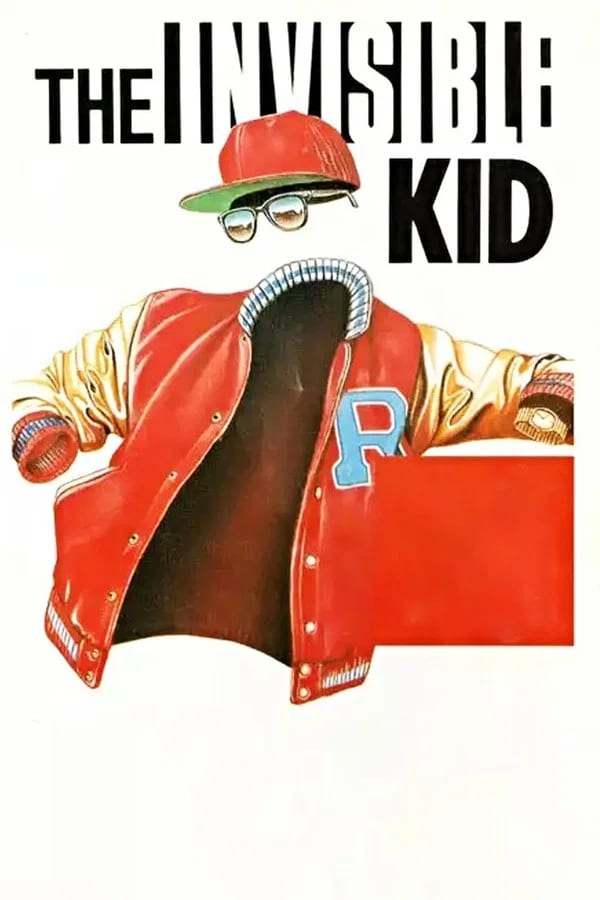
Some films are brilliant because they're genuinely great.
Others are brilliant because you first saw them when you were about twelve, and your brain decided that was enough evidence.
For me, The Invisible Kid falls firmly into the second camp.
Released in 1988, it tells the story of Grover Dunn, a science-loving teenager who accidentally finishes one of his late father's experiments and discovers a powder that turns him invisible. That's really all the setup you need. The film doesn't waste time trying to explain the science. It just hands a teenager the ability to disappear and lets the chaos unfold.
And honestly, that's why it works.
Every kid has wondered what they'd do if nobody could see them. You'd sneak into places you shouldn't. You'd get revenge on the school bully. You'd play daft pranks on your pals. The Invisible Kid knows exactly what fantasy it's selling, and it has a good laugh with it.
Aye, looking back now, a few scenes definitely belong in the late 80s and should probably stay there. The whole girls' changing room bit hasn't aged brilliantly, and it's one of those moments where you just shrug and go, "Different time." Thankfully, the film has enough charm elsewhere that it doesn't define the whole thing.
What really carries it is the atmosphere.
There's something about these low-budget teen comedies from the 80s that modern films never quite capture. The schools actually look like schools. The science lab looks like somebody raided a hardware shop and hoped for the best. Even the practical effects have that homemade feel where you can almost picture the crew standing just out of frame, holding fishing line and hoping nobody notices.
I miss that.
These days, if Hollywood makes a film about invisibility, it'll cost a hundred million quid, spend twenty minutes explaining quantum physics, then end with a city getting flattened by CGI. Back then they just thought, "What if a nerdy kid became invisible?" and rolled the cameras.
Jay Underwood is easy to root for as Grover. He's awkward without becoming annoying, and Wallace Langham makes a great best mate who's just as excited by the whole situation as you would be at that age. Then you've got Karen Black turning up as Grover's mum, chewing the scenery in the best possible way. Nobody looks like they're trying to win awards. They look like they're having a good time, and that rubs off on you.
One thing I've always liked is that the film never forgets it's supposed to be fun. Even when there's a daft subplot involving corruption and a basketball game, it somehow fits. It feels like somebody threw every teen movie cliché into a blender, pressed the button, then decided it was good enough. Weirdly, it is.
Critics absolutely hammered it when it came out. Some called it derivative, others thought it was painfully unfunny, and it disappeared from cinemas pretty quickly. Looking purely at reviews, you'd think it was a complete disaster.
But here's the thing.
I don't care.
There's a whole generation of films that critics dismissed because they weren't trying to be important. They were made to entertain teenagers on a Friday night, and thirty-odd years later people still remember them. That's a better legacy than plenty of Oscar bait that's been forgotten five minutes after release.
Every so often you'll see somebody mention The Invisible Kid online and the replies are nearly always the same.
"I haven't thought about this in years."
"I used to love this."
"I watched the VHS until it wore out."
That's the sort of nostalgia you can't manufacture.
Is The Invisible Kid a classic?
Probably not.
Is it a ridiculously entertaining slice of late 80s sci-fi cheese that's packed with practical effects, daft humour, teenage wish fulfilment and enough charm to make you forgive its rough edges?
Absolutely.
Sometimes a film doesn't need to be perfect. It just needs to remind you what it felt like to sit on the living room carpet on a Saturday afternoon with a bowl of crisps, hoping your mum wouldn't notice you'd watched the same tape for the fifteenth time.
The Invisible Kid still gives me that feeling, and that's worth far more than any critic's score.

Comments (0)
Be respectful — emails, phone numbers and profanity are filtered out.
No comments yet — be the first to share your thoughts.