Where to Play
Original platform
Overview
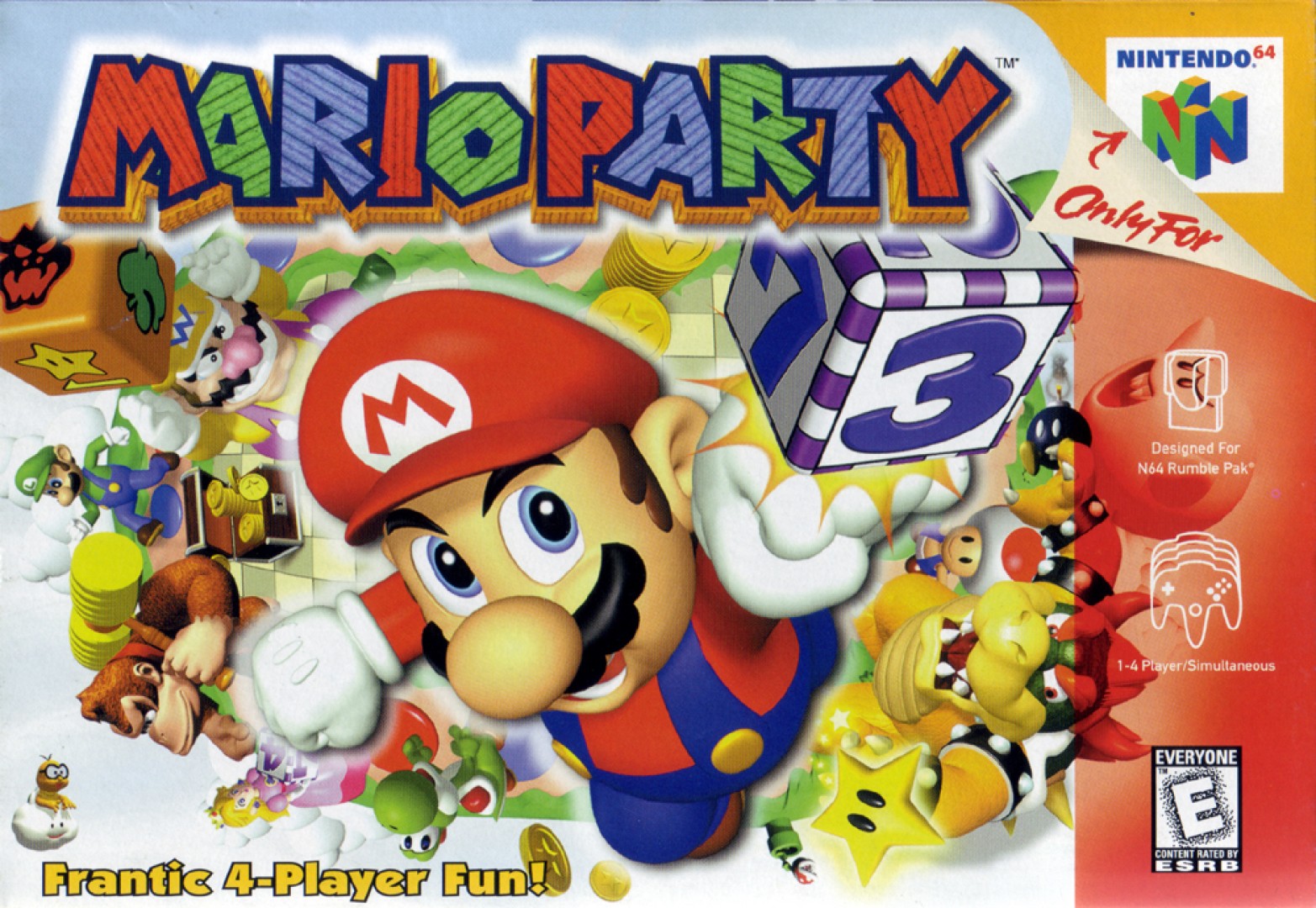
Every game in the main series has a standard Party Mode in which up to four players play through a board, trying to collect as many stars as possible. In every turn, each player rolls a die and progresses on the board, which usually has branching paths. Coins are primarily earned by performing well in a minigame played at the end of each turn. On most boards, players earn stars by reaching a star…
Cheats & Codes
No cheats or codes added yet for Mario Party. Know one? Share it below.
Trivia & Facts
During the 3rd Annual Interactive Achievement Awards, the Academy of Interactive Arts & Sciences nominated Mario Party for the "Console Children's/Family Title of the Year" award, which was ultimately given to Pokémon Snap.
Within the first two months of its U.S. release, Mario Party was among the top five most rented video games.
It was previewed in the January 1999 issue of The 64Dream and teased in the #116 issue of the Nintendo Power magazine published in January 1999 in the "Coming Next Issue..." section.
Moo of GameRevolution wrote that playing alone "is terribly boring, and realistically scrounging up 4 people to play Mario Party is harder than it sounds".
Electronic Gaming Monthlys authors gave the game an average score of 8.625 out of 10.
In Japan, Famitsus standard quartet of reviewers gave it a total score of 31 out of 40.