Where to Play
Original platform
Overview
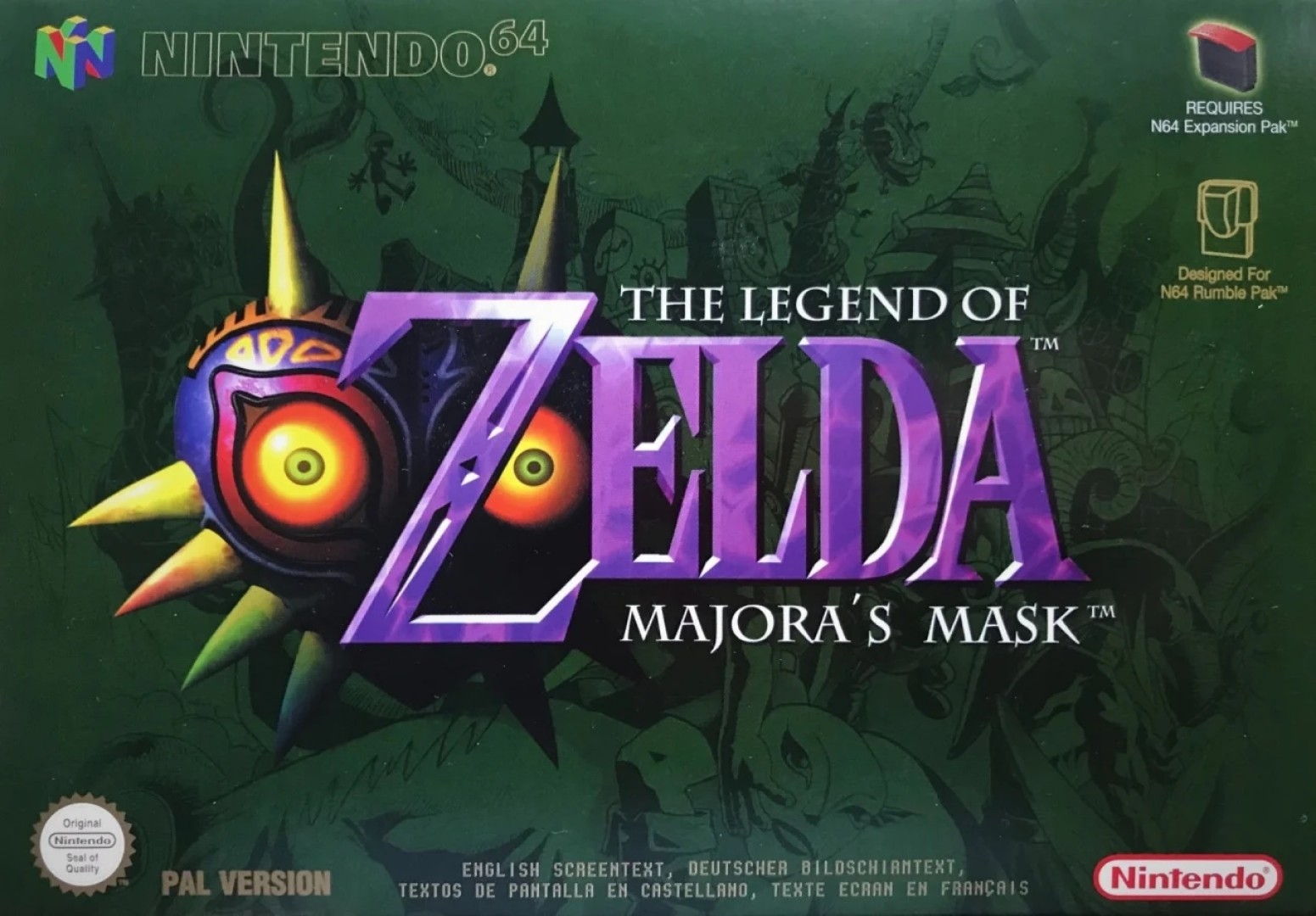
The Legend of Zelda: Majora's Mask is the sixth main installment of The Legend of Zelda series, first released on the Nintendo 64 in 2000. Unique among The Legend of Zelda series, the game includes a time system that spans three days, and this cycle must be reset periodically to progress through the game. Majora's Mask is one of the few Zelda games in which Ganon does not play any role whatsoever.…
Cheats & Codes
No cheats or codes added yet for The Legend of Zelda: Majora's Mask. Know one? Share it below.
Trivia & Facts
In 2002, it was retitled Ocarina of Time: Master Quest and packaged with pre-ordered copies of The Legend of Zelda: The Wind Waker for GameCube.
Early in development, this system originally rewound a week, but it was shortened as seven days was deemed too burdensome for players to remember and too complex to create in one year.
It was initially conceived as a remixed "Ura" edition of Ocarina of Time for the disc-based 64DD peripheral for Nintendo 64.
Aonuma, who had been in charge of dungeons for Ocarina of Time, was unenthused about simply redesigning them for Ura Zelda, so Miyamoto challenged his team to create a new game using the existing game engine and graphics in just one year.
The more limited team finished Majora's Mask in 15 months by reusing game assets.
Another team finished Ura Zelda, but it never came out on the 64DD, which was a commercial failure and not released outside Japan.